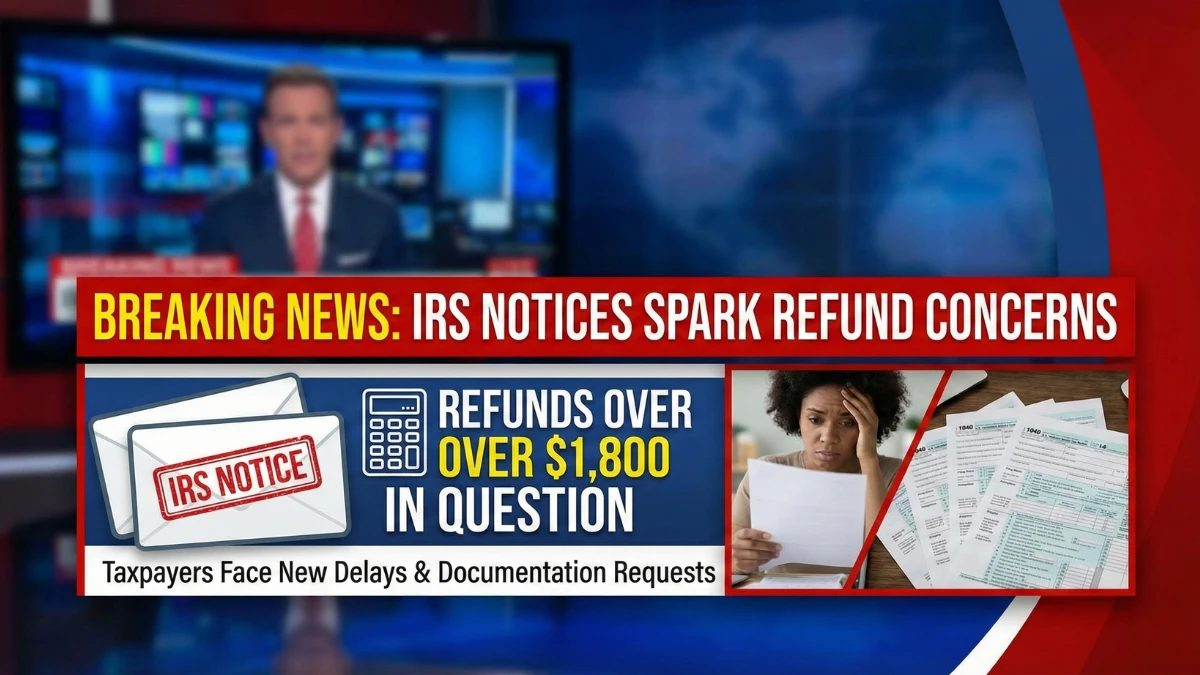
An increasing number of taxpayers expecting IRS refunds over $1,800 are receiving official notices instead of payments, prompting concern about delays, eligibility reviews, and possible errors. These notices are not uncommon during early and peak tax-season processing and often relate to verification steps rather than denial of refunds. This article explains why these notices are issued, what they usually mean, and how the Internal Revenue Service handles refunds at higher dollar amounts.
Why IRS Notices Are Sent for Refunds Over $1,800
Refunds above $1,800 frequently involve withholding adjustments or refundable tax credits, which automatically trigger additional IRS screening. When system checks require more time, the IRS sends a notice to inform taxpayers that processing is still underway.
| Common Trigger | Why It Matters |
|---|---|
| Higher refund amount | Extra verification checks |
| Refundable credits | Legally required review |
| Income mismatches | Employer reporting delays |
| Identity screening | Fraud prevention |
| Banking verification | Deposit confirmation |
What These IRS Notices Usually Mean
In most cases, an IRS notice does not mean your refund was denied or reduced. It typically means the IRS needs extra time to confirm information already submitted. Many notices are informational and do not require any response from the taxpayer.
Refundable Credits Play a Major Role
Refunds exceeding $1,800 often include credits tied to income or dependents. These credits must be validated against third-party data, which can slow processing even when the return is accurate.
Should You Respond or Take Action?
Taxpayers should read the notice carefully. If the notice does not request documentation or action, the best step is to wait. Sending unnecessary responses or refiling can delay the refund further.
How Long Do These Reviews Typically Take?
While standard refunds are often issued within 21 days, refunds over $1,800 that trigger notices may take several additional weeks. The timeline varies depending on the type of review and data verification required.
What Not to Do While Waiting
Avoid amending your return, calling repeatedly, or resubmitting information unless the notice specifically instructs you to do so. These actions can restart processing and extend delays.
How to Track Your Refund Safely
Taxpayers should rely only on official IRS refund tracking tools and mailed notices. Third-party sites and urgent messages requesting personal information should be treated with caution.
Key Facts to Remember
- IRS notices are common for larger refunds
- Refunds over $1,800 often face extra checks
- Most notices do not require action
- Delays do not mean denial
- Refunds are released after verification
Conclusion
IRS notices sent to taxpayers expecting refunds above $1,800 usually reflect routine verification and fraud-prevention processes, not problems with eligibility. While delays can be frustrating, most refunds are issued once required checks are completed, making patience and careful review of official notices essential.
Disclaimer
This article is for informational purposes only and does not constitute tax or legal advice. Refund processing times vary by individual circumstances. Always follow instructions provided in official IRS notices.