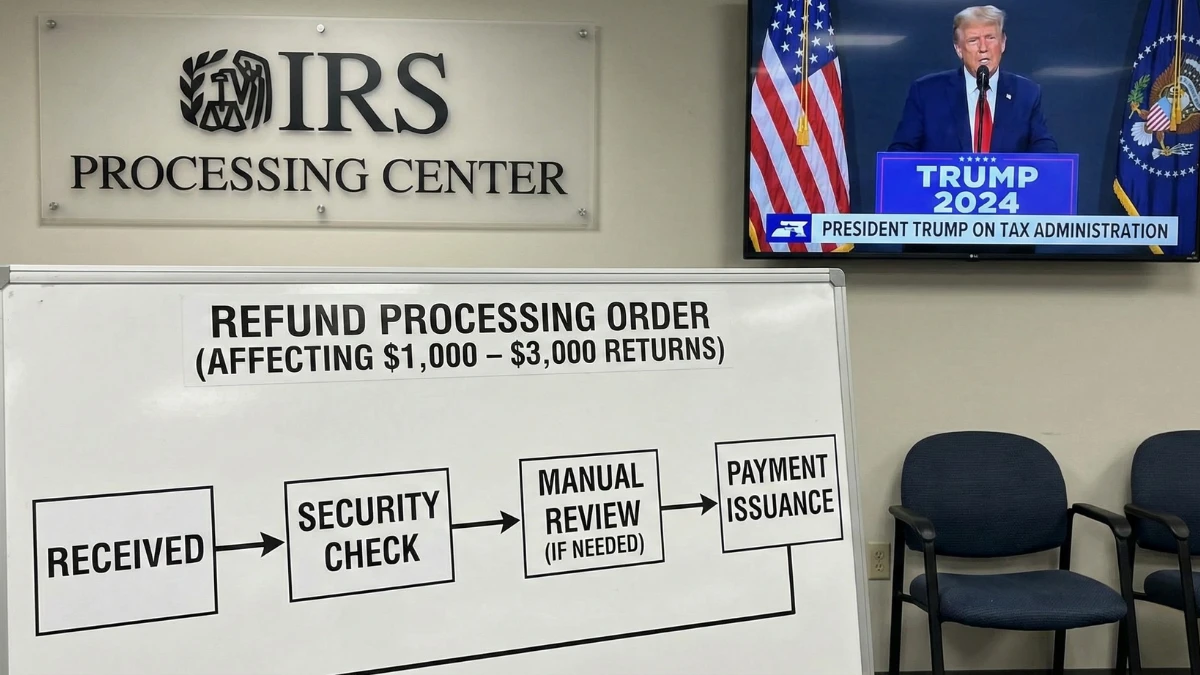
Many taxpayers expecting refunds between $1,000 and $3,000 notice that payments arrive at different times—even when returns are filed on similar dates. This variation is largely due to IRS processing order, not refund amount or favoritism. This article explains how the Internal Revenue Service processes returns, why timing differs, and what filers can expect when waiting for refunds in this common range.
What Does “IRS Processing Order” Actually Mean?
IRS processing order refers to the sequence and pathway a tax return follows after it is received. Returns are not processed strictly by filing date or refund size; instead, each return moves through automated checks and, if needed, manual review based on its individual details.
| Processing Factor | Why It Matters |
|---|---|
| E-file vs Paper | E-filed returns move faster |
| Return Complexity | Credits and changes add steps |
| Verification Flags | Extra checks slow approval |
| System Workload | High volume creates queues |
| Bank Processing | Final posting varies |
Why $1,000–$3,000 Refunds Are So Common
Refunds in the $1,000–$3,000 range typically result from normal tax situations such as moderate over-withholding, refundable credits, or income adjustments. Because these refunds often include credits, they may trigger additional IRS review, affecting processing order.
How Processing Order Changes Refund Timing
Two returns filed on the same day can end up in different processing lanes. One may clear automated checks quickly, while the other enters a verification queue. This difference—rather than refund amount—explains why one $2,200 refund arrives sooner than a $1,400 refund.
Role of Refundable Credits
Refundable credits frequently push refunds into the $1,000–$3,000 range, but they also require eligibility verification. Even minor discrepancies can move a return later in the processing order.
Why “Refund Approved” Doesn’t Mean Same-Day Payment
Once approved, the IRS releases the refund, but banks control final posting. Some institutions credit funds immediately, while others take 1–3 business days, further spreading out arrival times.
Can Taxpayers Influence Processing Order?
While taxpayers can’t control IRS queues, they can reduce delays by e-filing accurately, choosing direct deposit, and avoiding unnecessary amendments. Even then, timing differences are normal.
Key Facts to Remember
- Refund size doesn’t determine processing speed
- Returns move through individual review paths
- Credits often slow refunds in this range
- Bank posting times add variability
- Different arrival dates are normal
Conclusion
IRS processing order plays a major role in how quickly $1,000–$3,000 refunds are issued. Differences in verification steps, system queues, and bank processing—not refund size—explain why payments arrive on different days. Understanding this process helps taxpayers set realistic expectations and avoid unnecessary concern.
Disclaimer
This article is for informational purposes only and does not constitute tax or financial advice. Refund timing varies by individual circumstances. Always rely on official IRS guidance or tools.