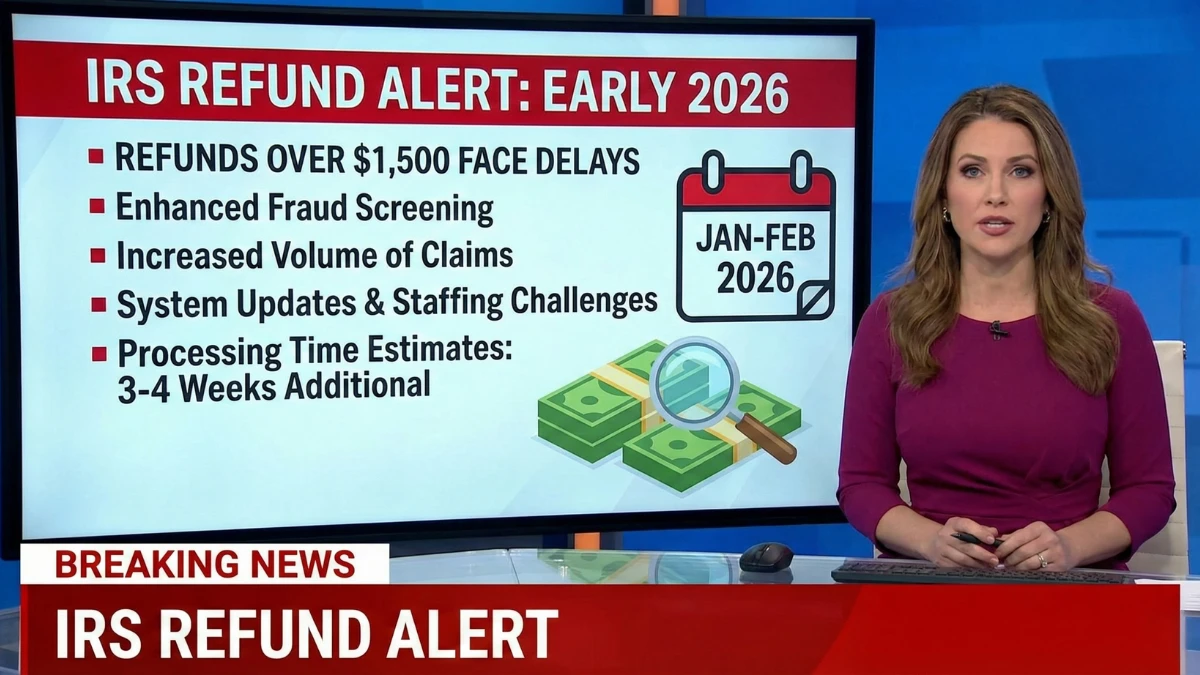
In early 2026, many taxpayers are noticing that IRS refunds above $1,500 are taking longer than expected to clear, even when returns are filed electronically. This delay has raised concerns about processing rules, verification checks, and whether larger refunds face extra scrutiny. This article explains why higher refund amounts often move more slowly, what’s normal in 2026, and how the Internal Revenue Service processes refunds behind the scenes.
Are IRS Refund Delays Normal in Early 2026?
Yes. Delays in early tax season are common, especially for refunds above certain thresholds. Larger refunds often trigger additional automated reviews, even when no errors are present. These checks are designed to prevent fraud and improper payments—not to penalize filers.
| Refund Factor | Why It Slows Processing |
|---|---|
| Higher Dollar Amounts | Extra verification checks |
| Refundable Credits | Mandatory review rules |
| Identity Screening | Fraud prevention filters |
| Bank Processing | Settlement timing differences |
| Return Accuracy | Small mismatches cause holds |
Why Refunds Over $1,500 Get Extra Review
Refunds above $1,500 frequently include refundable tax credits, adjusted withholding, or income changes from prior years. IRS systems automatically flag these returns for verification to ensure eligibility rules are met before releasing funds.
Refundable Credits Are the Biggest Reason
Claims involving credits such as child-related or income-based credits are legally required to undergo additional validation. Even when everything is correct, the IRS cannot release these refunds until verification steps are complete.
Identity and Fraud Protection Checks
In 2026, identity-theft screening remains stricter than in past years. Returns that pass through extra identity filters may still be valid—but the review adds time before refunds are approved.
Does Filing Method Affect Timing?
Yes. E-filing with direct deposit remains the fastest method, but it does not bypass required reviews. Paper returns or mailed checks can extend processing by weeks.
What Is Considered a “Normal” Wait in 2026
For refunds over $1,500, processing may take longer than the standard 21-day estimate, especially early in the season. This does not mean something is wrong—it usually means the return is still under routine review.
What Taxpayers Should (and Shouldn’t) Do
Avoid refiling, amending, or contacting the IRS repeatedly unless instructed. Doing so can reset processing. Monitoring official refund tracking tools is the safest approach.
Key Facts to Remember
- Refunds above $1,500 often face extra checks
- Refundable credits slow processing
- Identity screening adds time
- E-filing helps but doesn’t skip reviews
- Delays don’t mean denial
Conclusion
IRS refunds over $1,500 are taking longer in early 2026 primarily due to verification, fraud prevention, and credit validation, not because of new penalties or funding shortages. While waiting can be frustrating, most delayed refunds are released once standard checks are completed.
Disclaimer
This article is for informational purposes only and does not constitute tax or legal advice. Refund timing can vary by individual circumstances. Always rely on official IRS guidance for the most accurate updates.